

The 5 Step Formula for Managing
Anxiety and Panic Attacks
By
Martina McKeough
About this Free Report.
This report is designed for you to use personally or to share with friends and family who may need help managing their anxiety and panic. this report may not be reproduced in any form on the internet without permission from Balance Hypnotherapy.
© 2016 Martina McKeough
The 5 Step Formula for Managing
Anxiety and Panic Attacks
As experts in hypnosis we see hundreds of clients each year who suffer from anxiety, panic attacks as well as fears and phobias. They may have been suffering from the problem for just a few weeks or for many years. In many cases they have no idea where the problem has come from but they know that the anxiety is ruining their lives.
A typical client that we see with anxiety symptoms experiences both psychological and physical problems such as:
- Dizziness
- Fast heart rate
- Muscle tightness
- Nausea
- Sleeping Issues
- A feeling of dread or fear
- Sweating
- A shortness of breath
- IBS
When a number of these symptoms are combined it has a huge impact on your life. You can’t think straight, you feel tired from a lack of sleep and you feel constantly scared and worried. In the end you just want to curl up on the sofa and do nothing. For many the anxiety impacts their family life, their job, relationships and their ability to carry out normal every day activities.
At Balance Hypnosis we know that although anxiety can seem like it is taking over your life it is possible to take back control with some simple tools and strategies. We know this can be done without any need for medication but with some natural methods for calm and relaxation.
Just remember that before embarking on any anxiety self-help program we would advise you to get approval from your medical practitioner.
Strategy One
 In order to manage your anxiety and panic you firstly have to understand why you have it. When you understand the reason for a problem it begins to take away some of the feelings of fear.
Think of your anxiety as like a bodyguard. In an average person your inner bodyguard stands quietly on the side-lines and does not get involved in protecting you unless there is a threat or a problem.
If however something or someone threatens, embarrasses or scares you the bodyguard stands up, takes notice and enters into protection mode. It decides that in order to prevent the same horrible event from happening again it must make you avoid any situations which are similar.
The problem with your inner bodyguard is that it can’t talk to you so it has to find another way to communicate danger to you. As our bodies are able to release hormones such as adrenaline to help us enter fight or flight mode the bodyguard releases this into your system. These hormones increase our heart rate, increase muscle tension and get us ready to run from the supposed threat.
So rather than feeling worried or afraid about your bodyguard understand that it is only trying to help you in the only way it knows how. It really believes that you need to escape from a situation it perceives as a threat or a danger. Make friends with your inner bodyguard and then try and work out what the problem may be that is causing it to be on high alert.
It is worth noting that although for some people the problem may be immediately obvious for others it seems impossible to work out what the bodyguard is trying to tell you. This is where hypnotherapy can help as an experienced analytical hypnotherapist can work with you to find out what your subconscious mind is afraid or worried about.
Strategy Two
 Now that you are aware that your inner bodyguard is trying to communicate with you it is time to start identifying the issue that is creating your feelings of anxiety and panic.
Start by sitting down and taking half an hour to do nothing but think about your life and start to identify problems which may be creating stress. Stress is the number one cause of feelings of anxiety and panic. Here are some areas that you could start to consider:
Relationships – Is everything going ok in your relationship with your partner or are you experiencing arguments and tension? Is your partner abusive or threatening or is their mistrust and jealousy?
Work – Do you love your job or do you have the boss from hell? Are you criticised and micro managed whilst working long hours for little reward? Do you have to respond to emails and calls late into the evening and on holidays? Do you feel that you are always at work and can’t switch off?
Money – Are you comfortably off or are your finances in a bit of a mess? Do you worry about how you are going to pay the bills and where the next pay check is coming from?
Illness – Have you experienced a severe illness or been in hospital? Is a family member undergoing treatment for a medical issue and you are spending all your spare time looking after them?
Lifestyle – Are you burning the candle at both ends? Spending nights out partying, drinking too much or taking substances you know are unhealthy for you?
These are just a few of the areas where anxiety and stress can start. If you identify with any of these areas then you need to start to find a way of either managing the problem situation or stepping away from that stressor.
Although it is sometimes really obvious where your problem lies in other cases the issue is really difficult to identify. If you don’t know what your problem is it can be extremely difficult to rid yourself of anxiety. This is where hypnosis can make the difference in eradicating anxiety for good.
In hypnosis you are in a state of deep relaxation (which will help with anxiety symptoms). The more relaxed you become with your practitioner the deeper into a hypnotic trance you go. Over a short number of hypnosis sessions your clinical hypnotherapist can work with you to identify where your problem lies simply by questioning you under hypnosis. Even if you are not consciously aware of where your problem has come from in most instances a trained hypnotherapist will be able to identify the source of your problem.
As an example did you know that a fear of flying is not generally linked to flying at all? Let’s imagine that as a child you were playing at a friend’s house and you started to play hide and seek. You decide that a great place to hide is in a big wardrobe in the bedroom and you wait to be discovered. Your so called friends decide that it would be funny to lock you in the wardrobe and before you know it you are trapped!
From the child’s perspective they start to feel panicked and scared. They worry that the air might start to run out and that they might die in this place. As the fear increases they start to think they will never be found and they are trapped here forever. Of course eventually someone lets them out but the child’s inner bodyguard never forgets the possibility of danger in small enclosed spaces.
Years later the child is now a grown up and is flying on holiday to Spain. The door of the plane shuts and suddenly there is a dawning realisation that there is no escape route. The inner bodyguard floods their body with adrenaline and the feelings of fear and panic start to make them run away from the situation. So is the adult really afraid of flying? Of course not they have a fear of being trapped.
Knowing where you problem has come from and why it is triggered is a big step in helping to reduce anxiety. Hypnotherapy is the fastest form of therapy that can enable you to identify your sources of stress so that you can start to manage and control your fear. Counselling and medication may help but they are generally unable to get to the root of the fear so it can be stopped in its tracks.
Strategy Three
The third strategy which can help with anxiety is deep relaxation. Now I don’t mean the kind of relaxation that you get when you are sat in front of the television on the sofa. I am talking about the kind of relaxation that you get when your mind is totally switched off and you are doing absolutely nothing at all. How many times do you ever get a chance to do that?
Think about it and it really is incredibly logical. The polar opposite of anxiety is relaxation. It is impossible to feel incredibly relaxed and anxious at the same time. Therefore if you can be taught to get into the deepest form of relaxation there is apart from sleep then you are going to see some benefits in your anxiety levels.
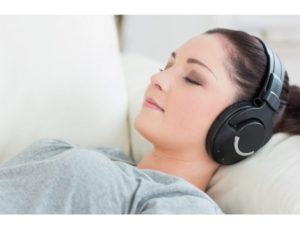
So how do you achieve this level of relaxation on your own? Simply lying on a bed or in a chair without any distractions can help but it is still possible that your mind will be too active and be unable to switch off. This is where our audio downloads that we give to our clients can make all the difference. We ask our clients to spend half an hour each day doing nothing apart from taking some time out and putting on one of our downloads.
Now we don’t ask our clients to actively listen to the words on the download as that involves concentration which is not relaxing. Instead we ask our clients to drift off on their day dreams and not bother to actively listening. What generally happens is that after a couple of listens the mind becomes bored of what it is hearing and will tune out. If you listen to one of the audios before you go to bed it is likely that you will fall asleep and have a great nights rest.
All our clients are given audios as part of our program for free but they can also be bought at our online shop for customers all over the world to listen to.


Strategy Four
As feelings of anxiety and stress come from inside you then you are also the person that can stop the feelings before they have even started. The problem is that in many cases an anxious person is on high alert. Their bodyguard has notified them that there is a danger or threat so immediately that part of the mind starts to look for where the danger is coming from. Part of this process involves an inward focus which is the last thing you need when you are trying to control anxiety.
Learning to focus externally instead of internally is an important part of learning to control anxiety and part this process involves distraction techniques.
 For example imagine that you start to feel anxious feelings appearing. Your body starts to get filled with adrenaline and your heart starts to beat faster. Instead of ignoring this you start to fixate on the increased heart rate and worry that something is wrong with you. The more you focus on your heart rate getting faster the quicker it becomes as your stress levels increase. As the panic rises further you begin to hyperventilate and then start to panic about not breathing properly. The more you focus on not being able to breathe the more the problem occurs and so on until eventually they are having a full blown panic attack.
Now let’s imagine this again but this time things are totally different. This time you feel feelings of anxiety but tell yourself that actually there is no danger so there is nothing to worry about. You decide that instead of sitting there worrying about the feelings you are going to choose to ignore them and do something different instead. You have promised your friend that you would make a birthday cake for their child so you start to prepare the ingredients and begin working on baking an amazing cake. As you become more involved in the process your mind stops focussing on the anxiety and before you know it the feelings have vanished.
Distraction is a great way of ignoring your internal feelings and focussing on something externally. Great distraction techniques can involve:
- Reading a book
- Watching a Film
- Meeting up with friends
- Doing some exercise
- Working on something complex
- Baking a cake
- Taking a walk
- Doing some housework
Over time it will become easier and easier to ignore the feelings of anxiety meaning that you are taking back control.
Strategy Five
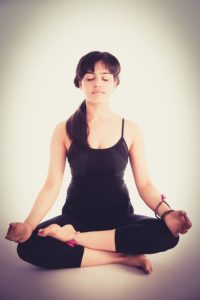 Most forms of anxiety and even panic attacks can be helped with the right kinds of breathing techniques. Here a
re two breathing techniques that can help with your anxiety or panic.
Generally anxiety and breathing go hand in hand. Some people will only take shallow breaths. When that happens they are breathing in too quickly. Hyperventilation also makes you breathe too quickly so that you feel that you are not getting enough air into your lungs. As our “fight or flight” mechanisms are brought into play we tend to focus inwardly. Therefore some people will focus intently on their breathing to the point where they are thinking about it too much. Taking back control of your breathing is relatively simple with the following techniques.
Simple Measured Breathing
Take a seat and relax your body. Try and make sure that your legs and hands feel relaxed and not tense. Check the muscles around your neck and shoulders and relax them as much as you can.
Start by taking a slow deep breath in through your nose. Inhale for a count of four. Continue to keep your body relaxed and allow your stomach to expand whilst you breathe in.
Hold the breath for a count of three
Release the breath really slowly for a count of seven.
Repeat this for a period of five to ten minutes.
CO2 Breathing
Many people who suffer from anxiety may start to hyperventilate especially at the start of a panic attack. In many cases they feel as if they are not able to get enough oxygen into the body. The fact is that you are actually getting far too much oxygen and your carbon dioxide levels are the problem as they are too low.
Simply get a small paper bag and hold it over your nose and mouth as you are breathing in and out. The bag is preventing you from breathing out too much C02.
If you are to use this technique then do not use a plastic bag and only take 6 to 8 breaths at a time from the bag. Breathe in and out without the bag for another 6 to 8 breaths before using the bag again.
Get Professional Help
Anxiety when left unchecked can start to take control of your life. It can make you miserable, fearful, depressed and tired. Yet it can be a relatively simple process to stop the feelings of anxiety and reclaim your life. These techniques are a great starting point but if you feel you really need professional help to resolve your problem then we are always happy to talk to you. We offer free telephone consultations and conduct anxiety programs both online and at our clinics in Nottinghamshire. To arrange a call back simply fill out the form below to speak to an anxiety expert.
Contact Us - Anxiety Help

